AI Product & Platform Builds
Talenture.ai: AI-native product proof
An AI-native recruiting platform taken from concept to working software, itself built with an AI-native development workflow.
talenture.aiSourcing, matching, engagement
AI recruiting software across the full candidate path.
AI-assisted engineering
Design-to-code workflows and agentic development tooling.
Working, maintainable software
Complex AI product concepts shipped as real software.
What the team runs today
Talenture.ai is live: an AI-native recruiting platform covering sourcing, matching, and engagement, built with an AI-native development workflow and shipped as working, maintainable software. It is built to remove the drag from hiring: agents handle interview scheduling, pre-screening, and candidate ranking, so recruiters spend their time talking to the right candidates, and the target metric is hiring quality, not just speed.
This is AI Product & Platform Builds in practice.
Inside the product
Four screens from the running product: how a match is explained, where a person decides, and what the same hire looks like from the candidate's side.
Every score carries its reasoning.
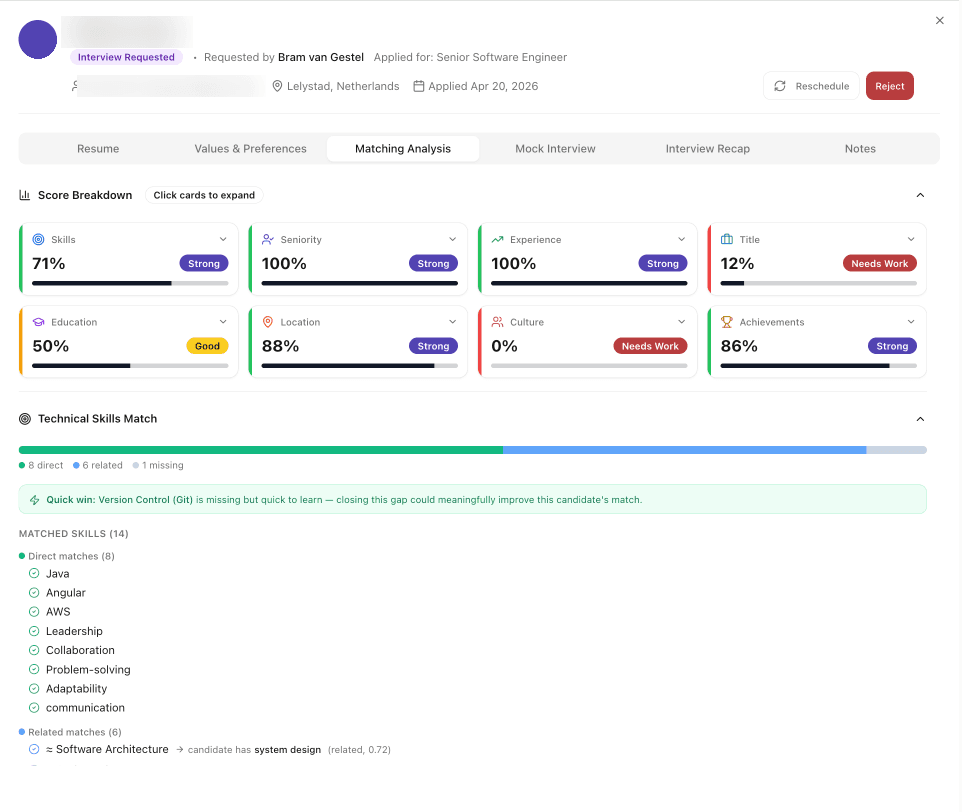
Eight direct skill matches, six related, one missing, and the weakest dimension named on its own card. A recruiter can see what the ranking rests on, and disagree with it. The agent drafts the rejection. A person sends it.
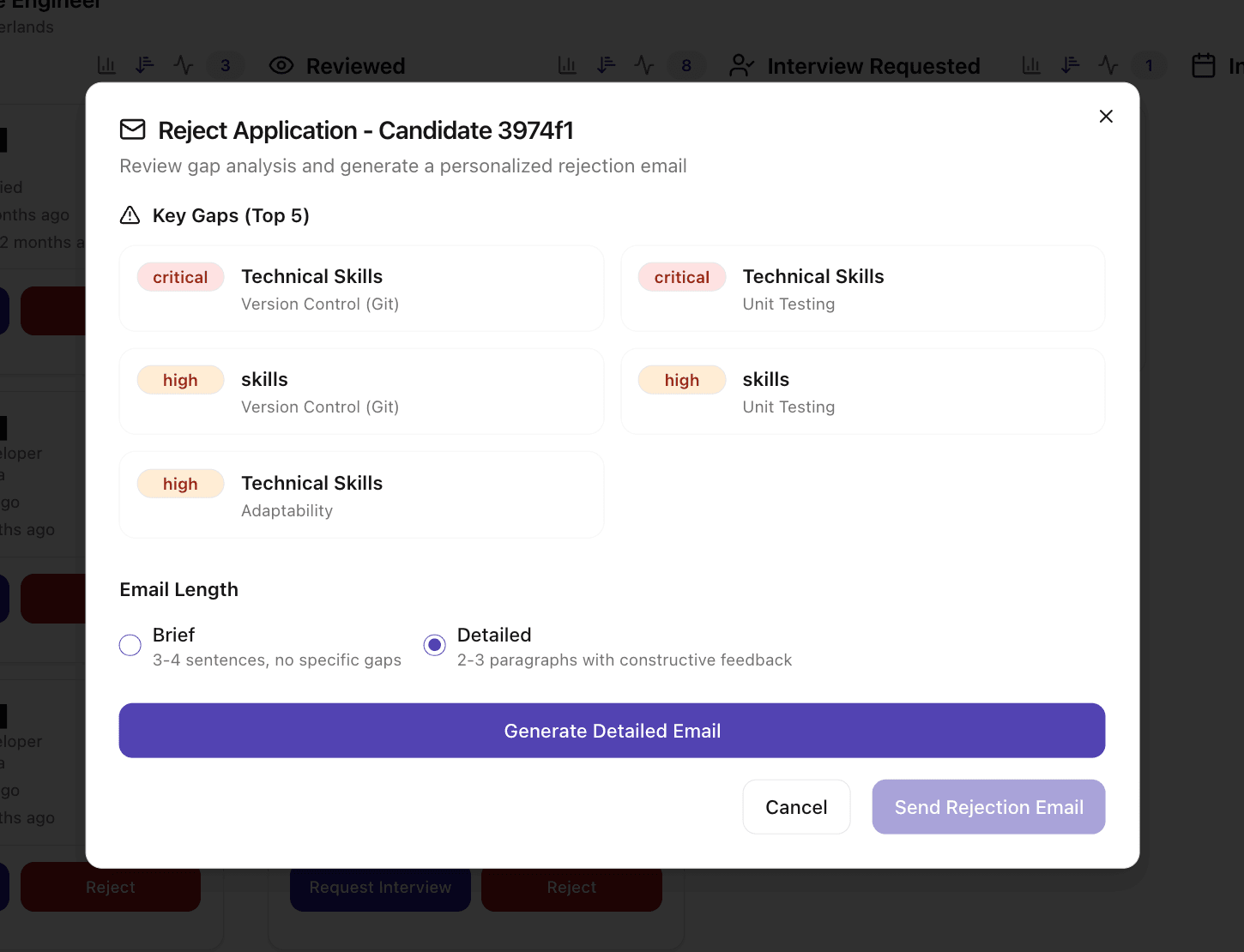
Five ranked gaps, then a choice about how much of that the candidate should hear. The email is generated on request and leaves on a second, separate click, so nobody hears from the system without someone deciding they should. The candidate gets an analyst of their own.
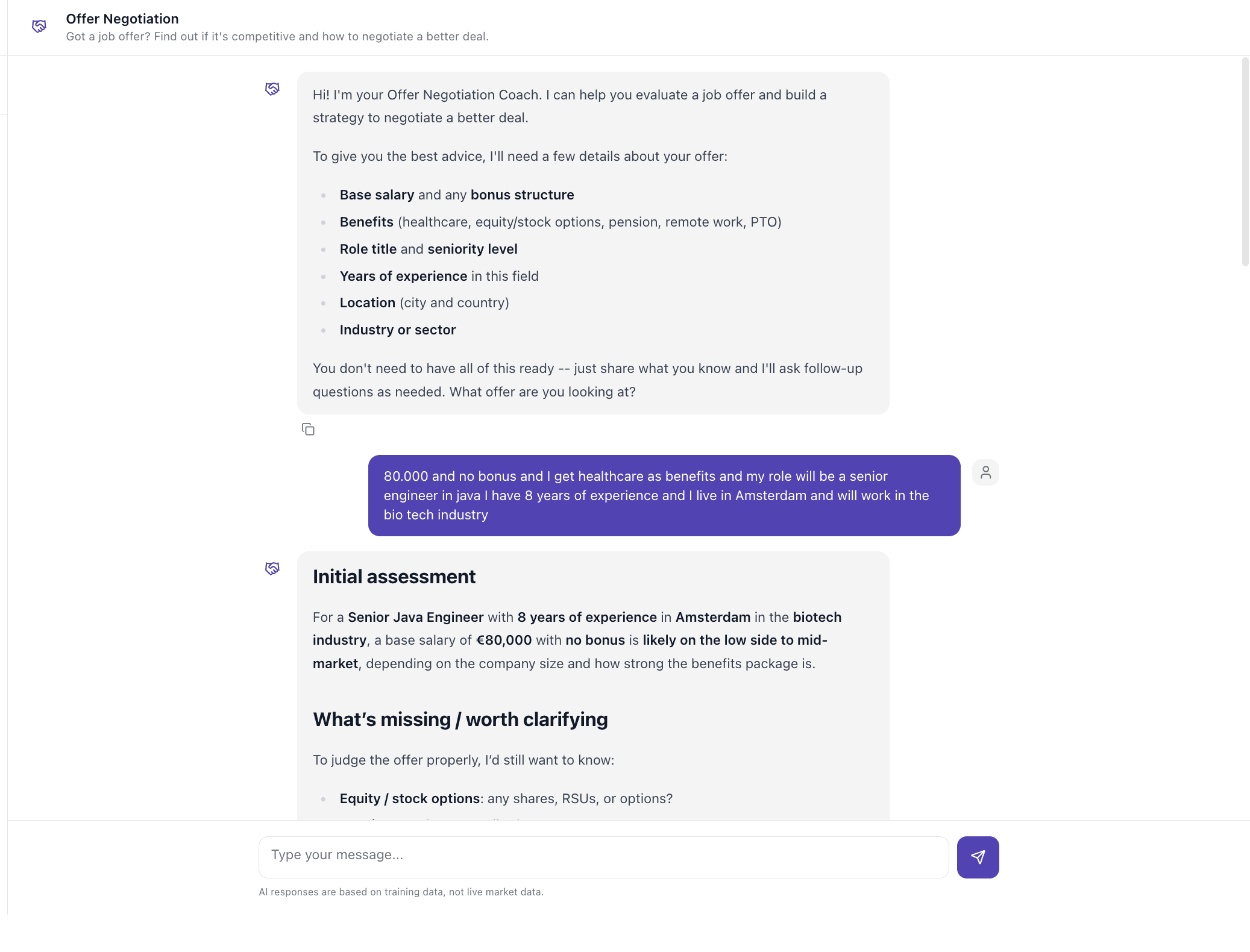
The coach reads the role, the years, the location and the sector, places the number against the market, and says what is still missing from the picture. The line under the input discloses that the advice comes from training data rather than a live market feed. Both sides of the hire read one pipeline.
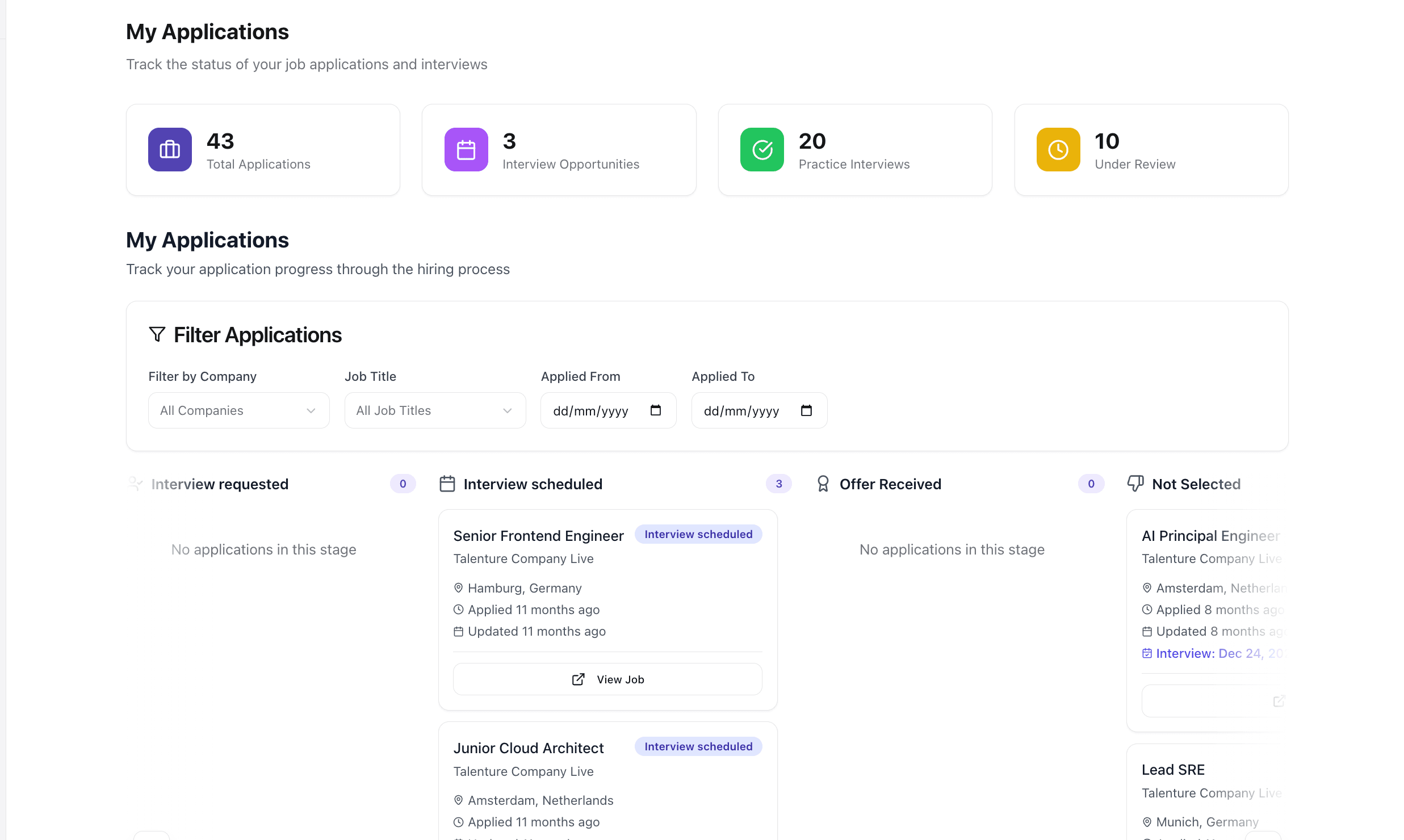
The candidate tracks 43 applications through the same stages the recruiter works in, so the status a company sets is the status the candidate reads. Practice interviews and open interview opportunities sit in the same view.
Other work
Have a workflow like these?
Bring yours. We will map where AI creates real leverage and what it takes to build it, maintainably.
You speak with the people who would build the system. No sales pressure, and an honest read either way.