AI Agents · 5 min read
What Is an AI Agent? The Question I Get on Every Sales Call
The explanation I give prospects on a call: what an agent is, how the reasoning loop works, and a walk through AgentLabs' own outbound engine, human approval included.
Bram van Gestel · Published 2026-09-10
I get the same question on almost every sales call, usually a few minutes after I say the word "agent" for the third time: what is that, in plain terms? Not the pitch version, the plumbing version. This is the explanation I give back, and it seems to land.
Not a smarter chatbot, a different kind of software
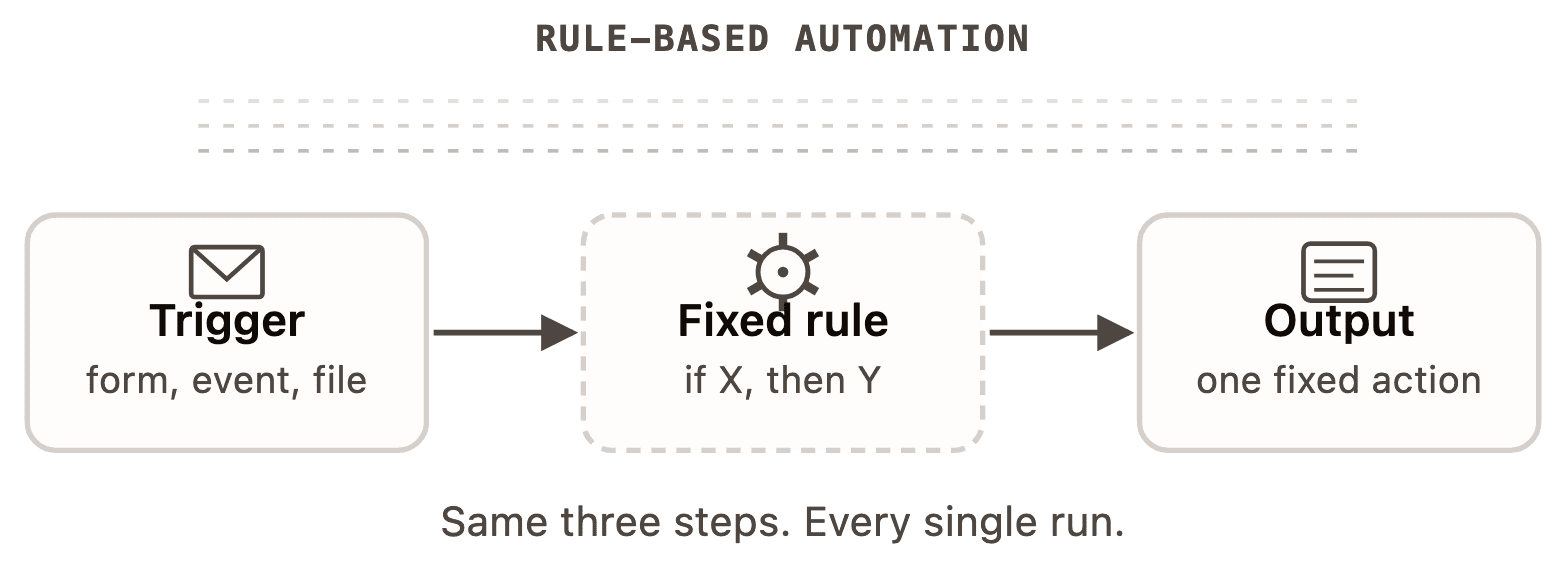
Most business software runs on fixed rules. A payment fails, it sends a reminder. A form comes in, it opens a ticket. The rule never changes, and the software never decides anything, it just executes.
An AI agent gets a goal and access to the right systems, then works out its own steps for whatever case is in front of it, the way a person would if the manual didn't quite cover it. That's the shift: from executing a rule to reasoning through a situation.
How it reasons
Underneath the agent sits a large language model, trained on how people describe problems and solve them. That's what lets it read a messy email or a half-finished spreadsheet and reason about it in roughly the same terms a person would, then turn that reasoning into an action it's allowed to take. The reasoning runs as a loop, not a single lookup, and it repeats until the goal is met, not until a rule runs out.
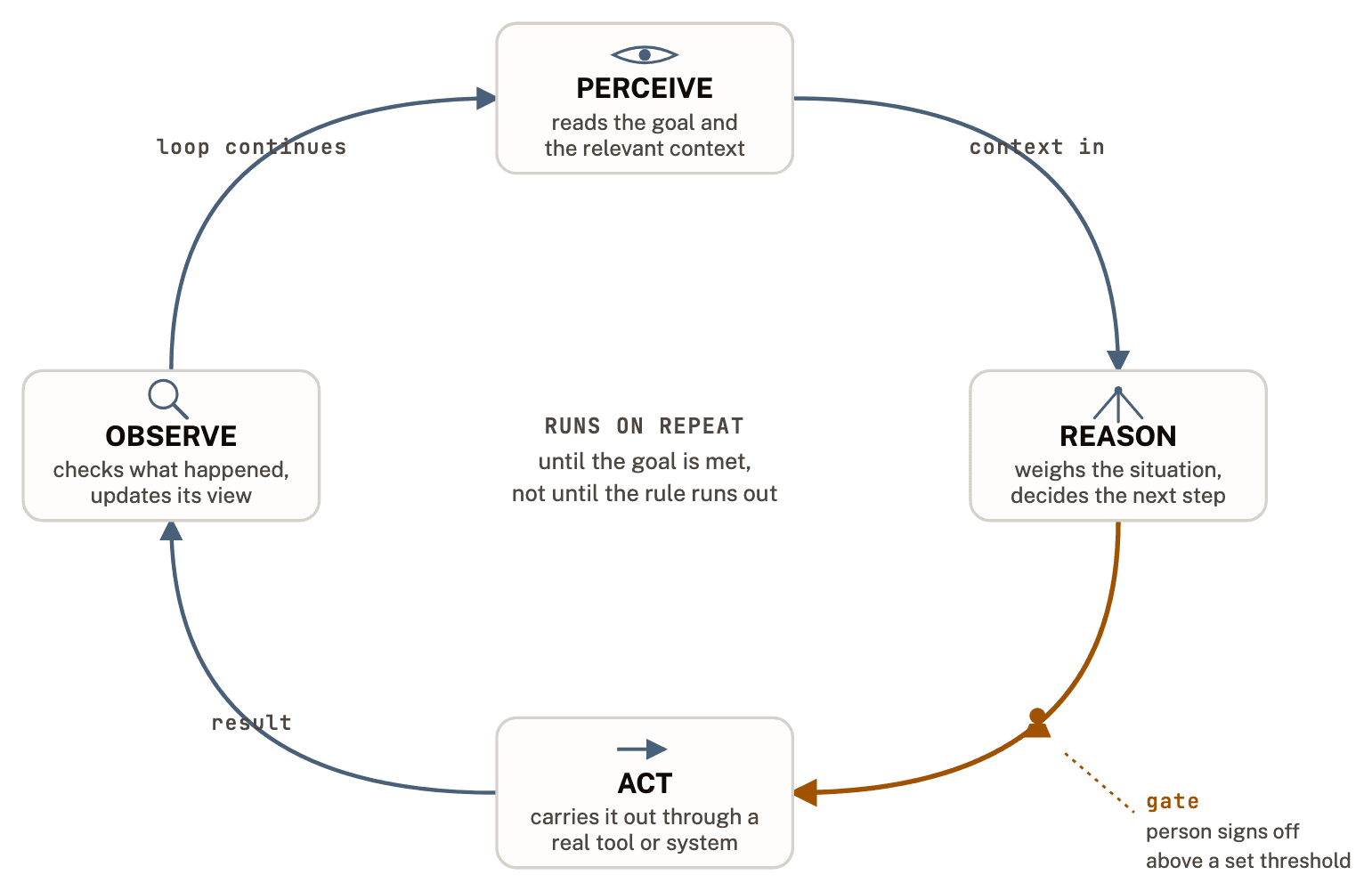
Not every step in that loop is left to the agent. Where a decision carries real weight, a refund above a set amount, a message going out under someone's name, the loop stops at a gate and a person decides before anything happens. That's what makes an agent usable in a business: fast reasoning paired with control that never becomes optional.
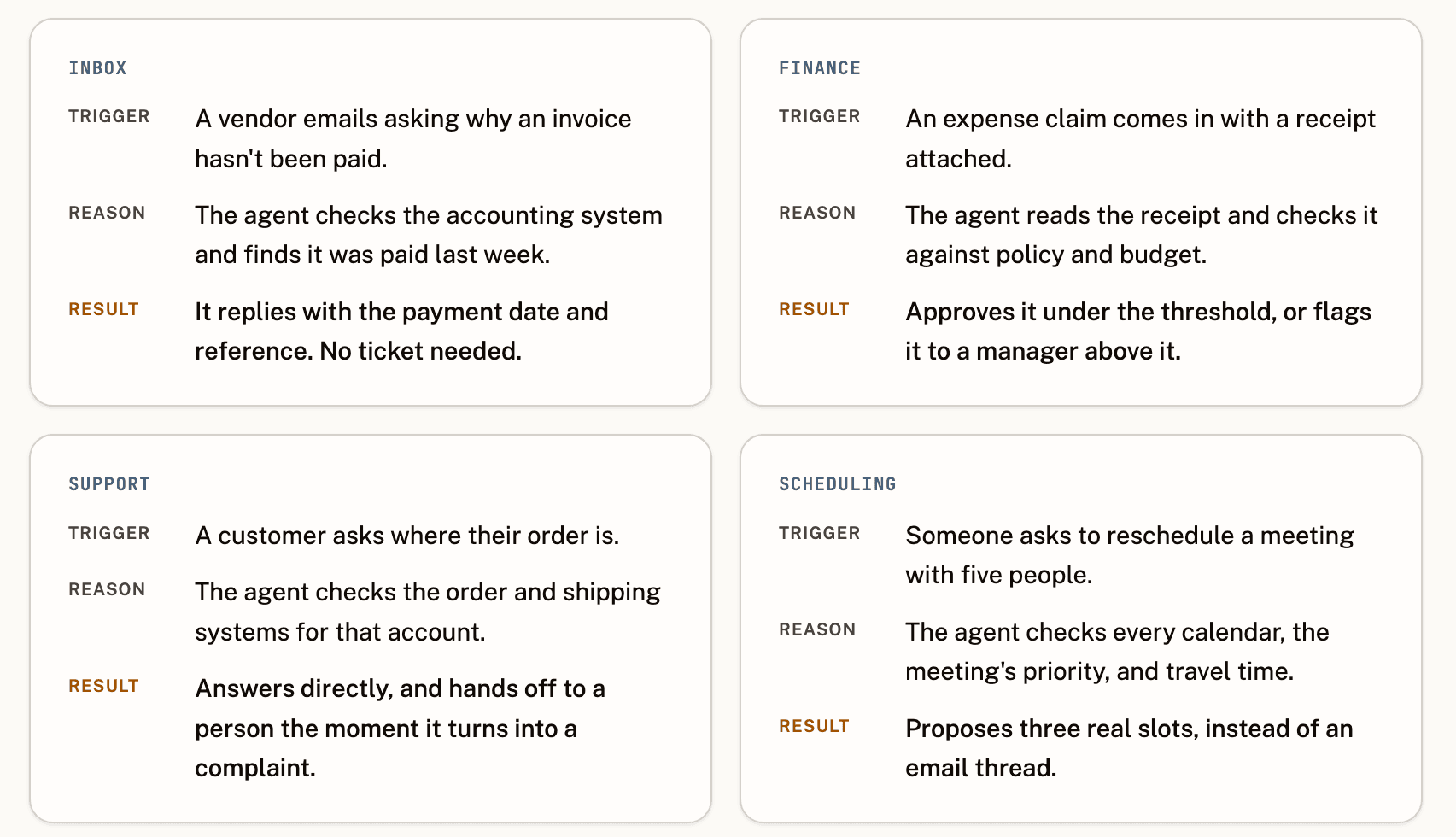
Where this shows up in an ordinary week
A real one: what we run
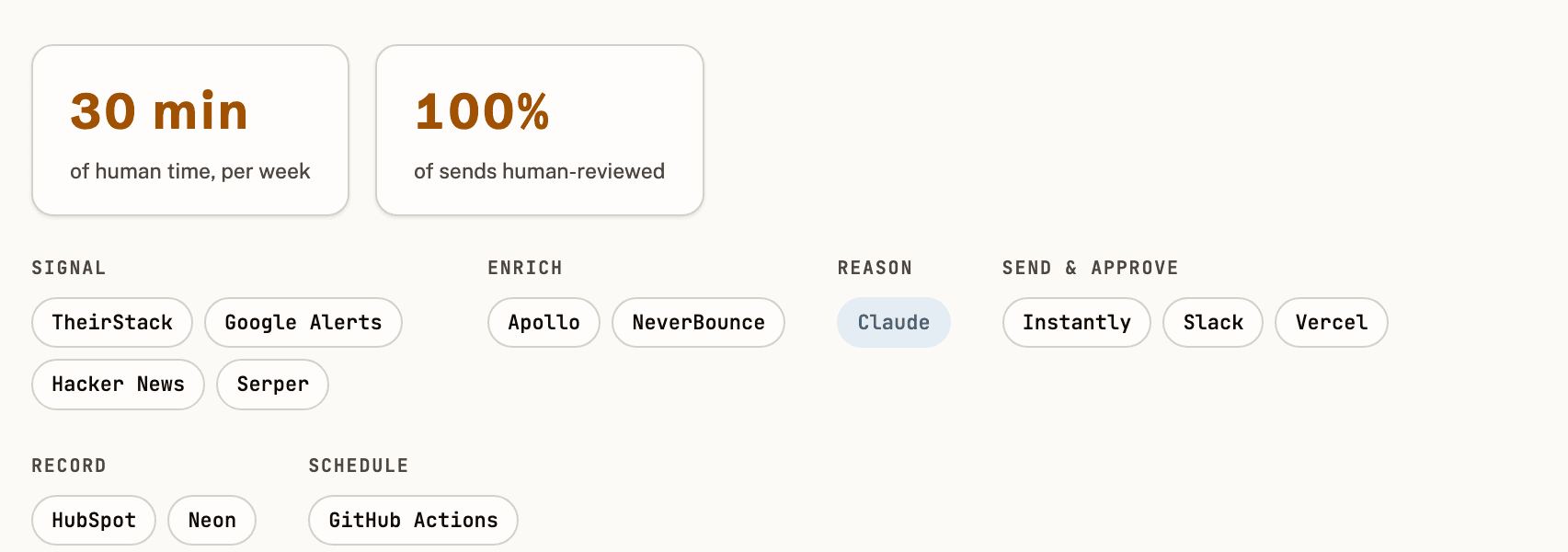
The examples above are illustrative. This one is different: the outbound engine running our own new-business pipeline today, real numbers included, since there's no client here to anonymize.
It finds companies showing a buying signal, enriches the contact and verifies the email, and drafts outreach for that segment. Claude does the reasoning three separate times in this build: classifying each signal, writing the draft, and then a second, stronger pass that grades and rewrites what the first pass produced.
When a reply comes in, the same loop runs again on a smaller scale.
Watch it run: a reply comes in
Steps on the left, what the agent is looking at on the right. Click a step, or press replay.
PERCEIVE
New reply lands
- FROM
- {{contact_email}}
- SUBJECT
- Re: quick question
- RECEIVED
- 3 hours ago
Stored before any model runs, so an outage delays a reply, and never loses one.
- Instantly
- Neon
Every guard and gate in the full build: agentlabs.works/work
Agent types, and the words for them
Same loop underneath, every time. What changes is what an agent is allowed to touch, and how many of them work on one goal together.
- Single-task agenttool-calling agent
- One goal, a handful of tools, runs the loop until it is done.Seen in: the inbox, finance, support and scheduling examples above.
- Multi-agent systemmulti-agent orchestration
- Several agents on one goal, often one drafting and a second, stronger one reviewing the work before it counts.Seen in: our outbound engine, Claude drafts the sequence, a stronger model grades and rewrites it.
- Retrieval agentRAG, retrieval-augmented generation
- Looks something up in your own systems before it answers, instead of guessing from what the model already knows.
- Computer-use agentcomputer use
- Clicks through a screen and reads what's on it directly, for the systems that have no clean way in otherwise.
- Voice agentvoice agent, real-time agent
- The same loop, running live on a phone call instead of over email or a ticket.
The words people use
What a technical buyer might say, and what it means in the terms above.
- LLM, foundation model
- The reasoning engine underneath an agent, Claude, GPT, or Gemini. Reads and writes text; plans and drafts.
- Tool calling, function calling
- How the model does something instead of only describing it: a real call to a real system.
- MCP, Model Context Protocol
- The now-standard way to connect an agent to a tool or a data source, one connection instead of a custom integration per system.
- Context window
- How much the model can hold in mind at once: the thread, the document, the record it just pulled.
- Orchestration
- The layer that sequences steps, retries failures, and enforces gates. Ours runs on GitHub Actions.
- Gate, guardrail
- A rule the system enforces before a consequential step fires. Our term: gates, not guidelines.
- Human-in-the-loop
- People stay accountable for the decisions that carry weight; agents handle the volume around them.
- Agentic operating system
- The redesigned workflow, process, agents, integrations and human checkpoints, running inside the business rather than staged as a demo.
That's the whole explanation, the one I give on a call: an agent is software that perceives, reasons, and acts inside limits someone set on purpose. The interesting engineering is almost never the reasoning. It's the gate.